
Bulk Corporate E-Waste Recycling Services to Reduce Enterprise Compliance and Legal Risk
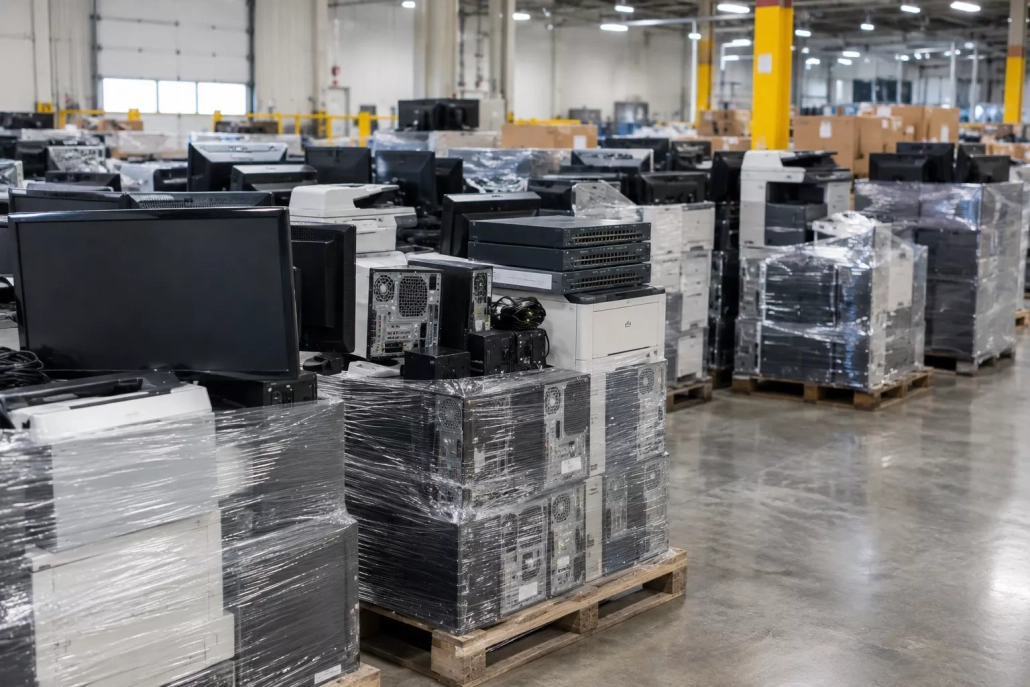
Large enterprises retire electronic equipment on a scale that makes ad hoc disposal a serious legal exposure. Bulk corporate e-waste recycling turns that volume into a controlled, documented, and defensible program across every location. Regulators, insurers, and boards now expect proof that retired hardware moves through certified channels.
State enforcement actions have grown sharper, penalties have climbed, and federal expectations continue to expand. Consequently, disposal decisions once treated as facilities work now sit inside compliance and legal risk frameworks. Bulk programs give you the coordinated infrastructure to meet those expectations at scale.
How Do Bulk E-Waste Recycling Services Reduce Enterprise Compliance and Legal Risk?
Bulk e-waste recycling services reduce enterprise risk by consolidating disposal under certified, documented, and regulator-aligned processes across every site. They apply verified sanitization, chain of custody controls, and serialized reporting to every retired data-bearing device. As a result, your organization gains defensible evidence, lower penalty exposure, and simplified audit responses across every jurisdiction.
Why Bulk Programs Reduce Enterprise Legal Exposure
Retired electronics carry residual data, hazardous materials, and jurisdictional obligations that vary state by state. Consequently, uncoordinated disposal across multiple sites multiplies your legal exposure with every retirement cycle. Bulk programs replace that fragmentation with unified controls and centralized documentation.
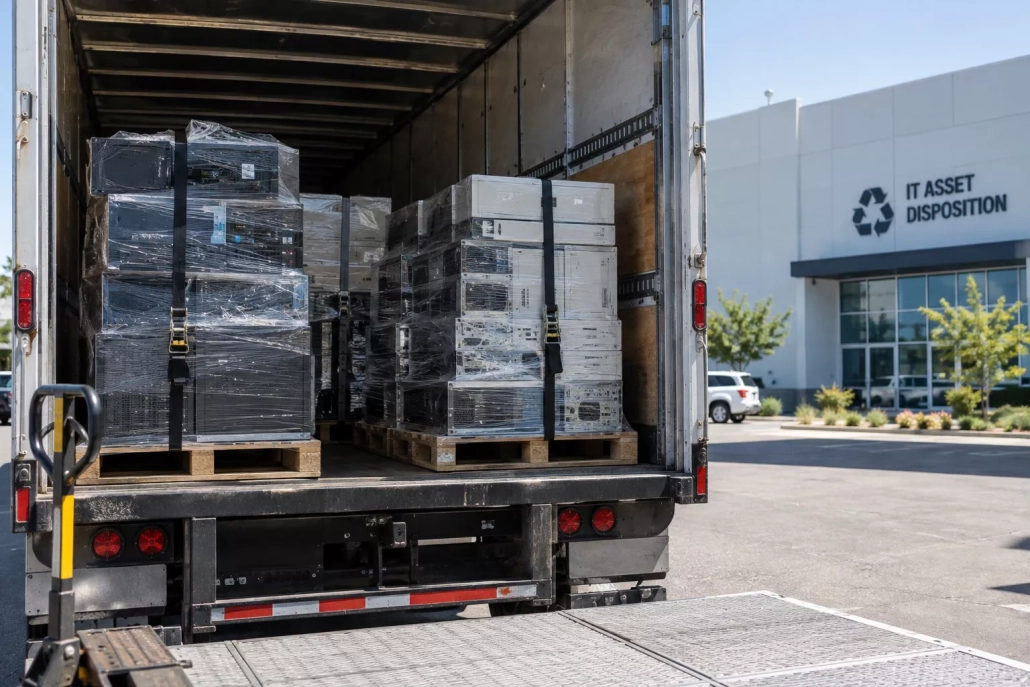
Enterprise legal teams increasingly review disposal contracts alongside data protection agreements and insurance policies. Therefore, the ability to demonstrate consistent controls across every facility becomes a material defense during litigation or investigation. Serialized reporting also supports subpoenas, discovery requests, and regulator inquiries with clean evidence trails.
According to state e-waste enforcement analysis, Comcast received a $25.95 million penalty in California for improper e-waste disposal. Additionally, California penalties can reach $70,000 per violation per day with 300% multipliers for willful non-compliance. Bulk programs close the exposure gaps that produce those enforcement outcomes.
Learn how our ITAD and e-waste recycling services reduce legal exposure across every enterprise site.
How Certified Partners Simplify Multi-State Compliance
Multi-state enterprises face a patchwork of e-waste laws that shift regularly and vary widely in scope. Consequently, in-house teams struggle to track every rule change across 25 states plus the District of Columbia. Certified bulk partners maintain that regulatory awareness as part of their operating model.
Your program should apply consistent controls to every site while adjusting for jurisdiction-specific requirements. In practice, the following capabilities distinguish enterprise-grade bulk recyclers from local vendors.
- Nationwide coverage: Uniform pickup, transport, and processing across every state
- Certification depth: R2v3, ISO 14001, ISO 45001, and NAID AAA credentials on file
- Regulatory tracking: Ongoing monitoring of state EPR laws and federal rule changes
- Standardized reporting: Consistent formats across every facility for compliance reviews
- Downstream oversight: Documented tracking through every processor in the recovery chain
Uniform standards also reduce audit preparation time for compliance officers managing dozens of sites. Read more about centralizing asset disposition for national organizations to see how bulk programs consolidate multi-site compliance.
The Federal Regulatory Landscape Shaping Corporate Disposal
Federal expectations for corporate e-waste recycling continue to expand alongside state enforcement pressure. Consequently, enterprises need programs that anticipate rule changes rather than react to them. The Resource Conservation and Recovery Act (RCRA) framework remains the foundation for hazardous waste obligations tied to retired electronics.
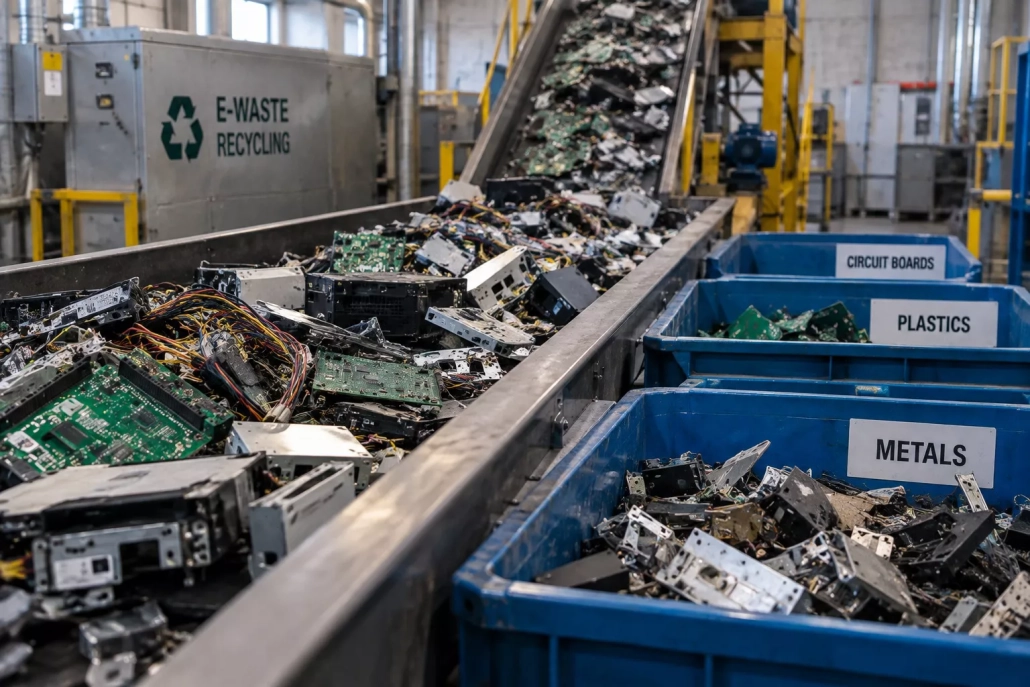
According to EPA rulemaking on universal waste expansion, the agency is developing new categories for lithium batteries and photovoltaic solar panels under RCRA. Similarly, RCRA violations for hazardous waste can reach $70,117 per day per violation through federal enforcement. Bulk partners with EPA-aligned processes reduce that exposure at the source.
Federal contractors, healthcare providers, and financial institutions face additional overlays from HIPAA, GLBA, and FISMA on top of environmental rules. As a result, your disposal program needs to satisfy multiple frameworks simultaneously without duplicating effort. Certified partners deliver documentation that maps to each framework in one coordinated report.
Regulatory momentum favors organizations that build compliance into disposal from the start. Explore our approach to aligning IT asset disposition with regulatory standards for cross-framework alignment.
How to Structure a Bulk Program for Defensible Outcomes
A defensible bulk program starts with clear policy, standardized workflows, and vendor accountability written into contracts. Otherwise, execution drifts across facilities and documentation gaps accumulate quietly over time. A structured approach turns e-waste recycling from an operational task into a controlled compliance function.
Your team should define specific requirements for every stage of the disposal lifecycle. Additionally, contract language should tie certifications, reporting formats, and service levels to measurable outcomes.
- Written disposal policy: Documented standards for every retired device category
- Approved vendor list: Certified partners vetted for capability and regulatory coverage
- Standardized manifests: Consistent pickup documentation across every site
- Serialized reporting: Device-level records tied to sanitization and destruction outcomes
- Quarterly reconciliation: Verification that inventory matches destruction certificates
Regular reconciliation surfaces gaps before auditors or regulators find them first. Review our guidance on standardized IT asset reporting for compliance audits to strengthen reporting discipline.
Bring Bulk E-Waste Recycling Into Your Enterprise Risk Program
Bulk corporate e-waste recycling now sits at the intersection of legal, compliance, environmental, and operational risk management. Certified programs turn scattered disposal activity into defensible, audit-ready outcomes that satisfy regulators and boards. The result is lower penalty exposure, cleaner audits, and stronger evidence during any investigation.
RAKI supports enterprise programs with R2v3, ISO-certified processes, nationwide coverage, and serialized reporting across every retired device. Our team delivers coordinated bulk services designed to reduce compliance and legal risk at scale. To bring defensible bulk e-waste recycling into your enterprise program, speak with our team today.


Leave a Reply
Want to join the discussion?Feel free to contribute!