Secure SSD Destruction: Addressing the Challenges of Solid State Storage
Summary
Secure SSD destruction addresses the unique risks of solid state storage. Learn why traditional wiping fails and what certified programs require.
Modern laptops, servers, and mobile devices increasingly rely on solid state storage rather than traditional magnetic hard drives. Consequently, the sanitization methods your organization trusted for decades no longer produce reliable results on retired equipment. Certified partners now apply specialized techniques that address the unique architecture of flash memory.
Retired solid state storage carries residual data that survives standard wipes, quick formats, and even some manufacturer-recommended commands. Without verified destruction, that residual data quietly creates breach exposure across every retirement cycle. Structured programs close those gaps with methods designed specifically for flash-based media.
What Are the Main Challenges of Secure Solid State Storage Destruction?
Secure solid state storage destruction faces challenges from wear leveling, over-provisioning, garbage collection, and firmware-level commands that often fail silently on SSDs. Traditional overwriting methods that worked on magnetic hard drives leave recoverable data trapped in cells the operating system cannot address. As a result, certified partners rely on cryptographic erasure, verified secure erase commands, or physical destruction to guarantee complete data removal.
Why Solid State Storage Requires a Different Sanitization Approach
Flash memory writes data differently from magnetic hard drives, which makes traditional sanitization tools unreliable at the physical layer. Consequently, standard overwrite passes miss data hidden in over-provisioned cells and remapped bad blocks. Solid state storage requires methods that address the drive controller and firmware rather than logical block addresses alone.
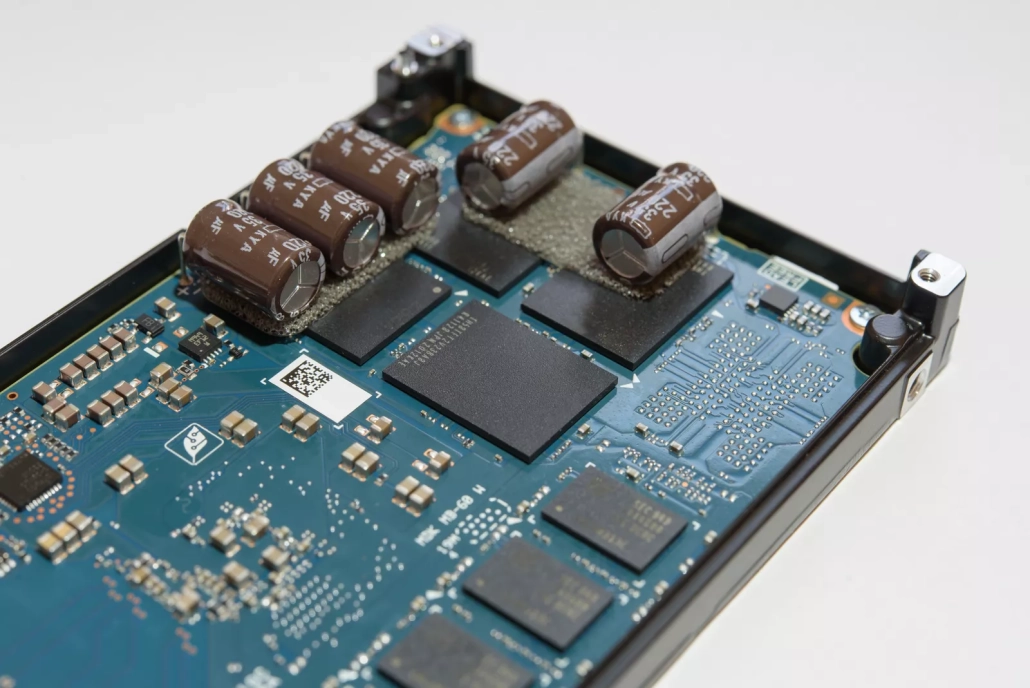
According to academic research on device-level SSD security, SSDs employ out-of-place writes and wear leveling that preserve obsolete data until garbage collection completes. Additionally, digital remnants persist in source blocks during every update cycle, creating a data recovery window for attackers. Retired drives entering ad hoc disposal streams inherit that entire recovery window.
Your program should require sanitization methods that address the physical realities of solid state storage architecture. Therefore, cryptographic erasure or verified physical destruction now sit at the center of every defensible SSD retirement workflow.
Learn how our secure data destruction protects sensitive information across every SSD retirement cycle.
The Hidden Failure Modes of Standard SSD Wipes
Standard sanitization commands often report success while leaving recoverable data behind on solid state storage. Additionally, firmware bugs, incomplete implementations, and vendor-specific quirks make results wildly inconsistent across drive models. Verified destruction requires validation beyond the drive’s own status message.
According to a technical guide on SSD data destruction from Disposition Compliance, ATA Secure Erase commands fail on 33% of consumer SSDs due to firmware bugs. Similarly, only about 40% of enterprise NVMe drives support hardware encryption required for reliable Crypto Erase. Enterprise programs cannot assume standard commands produce complete sanitization across mixed fleets.
Certified partners apply specialized tooling, verification checks, and physical destruction infrastructure that in-house teams rarely maintain. As a result, your program gains defensible evidence that every retired solid state storage device left the organization fully sanitized. Serialized reporting ties each drive to a verified destruction method and outcome.
Explore how our approach to certificates of destruction captures verified sanitization outcomes for every SSD.
How to Structure Secure Solid State Storage Destruction Programs
A defensible destruction program starts with clear policy, verified methods, and vendor accountability written into contracts. Otherwise, execution drifts across sites and unverified wipes accumulate quietly across every retirement cycle. Structured programs turn solid state storage destruction into a repeatable, audit-ready operation.
Your team should define specific requirements for every stage of the SSD destruction workflow. In practice, the following elements distinguish enterprise-grade programs from ad hoc SSD disposal arrangements.
- Pre-destruction inventory: Verified records of every SSD scheduled for sanitization
- Method selection: Cryptographic erase, verified secure erase, or physical destruction based on data classification
- Verification checks: Post-command validation to confirm complete sanitization
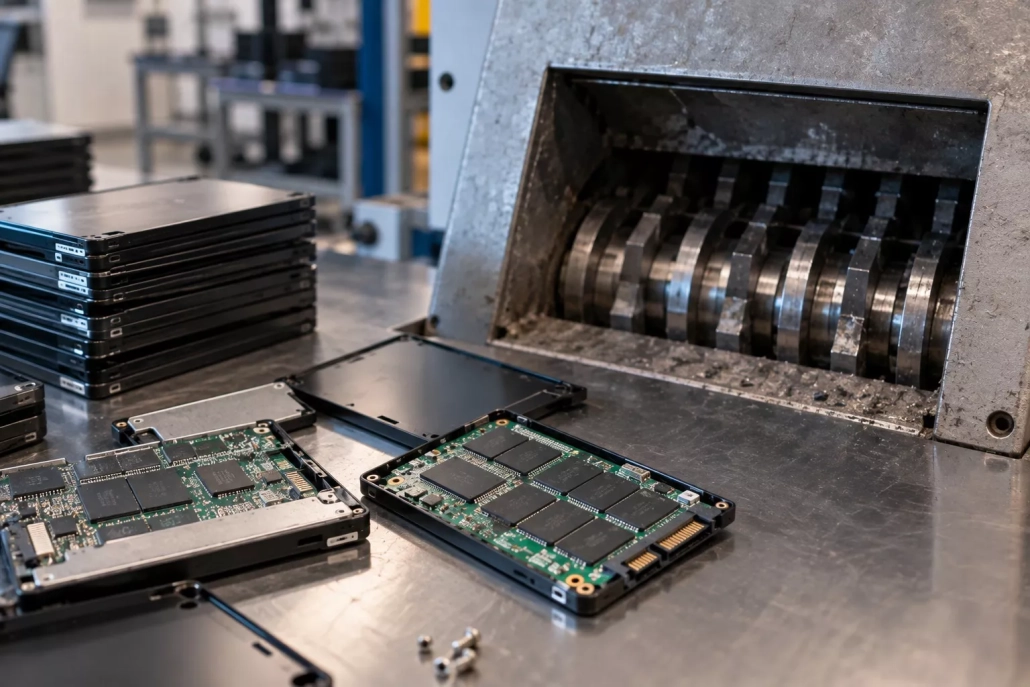
- Physical destruction: Shredding to particles small enough to prevent chip reconstruction
- Serialized reporting: Device-level records tied to method, operator, and outcome
Coordinated planning also reduces the internal workload on IT and security teams during high-volume retirement events. Read our guidance on standardized IT asset reporting for compliance audits to strengthen destruction documentation.
What to Require From Your SSD Destruction Partner
Destruction projects succeed based on how well your partner handles the specific challenges of solid state storage across every retired device. Consequently, contract language should tie certifications, verification methods, and reporting formats to measurable outcomes. Certified partners deliver the specialized tooling and infrastructure that in-house teams rarely maintain.
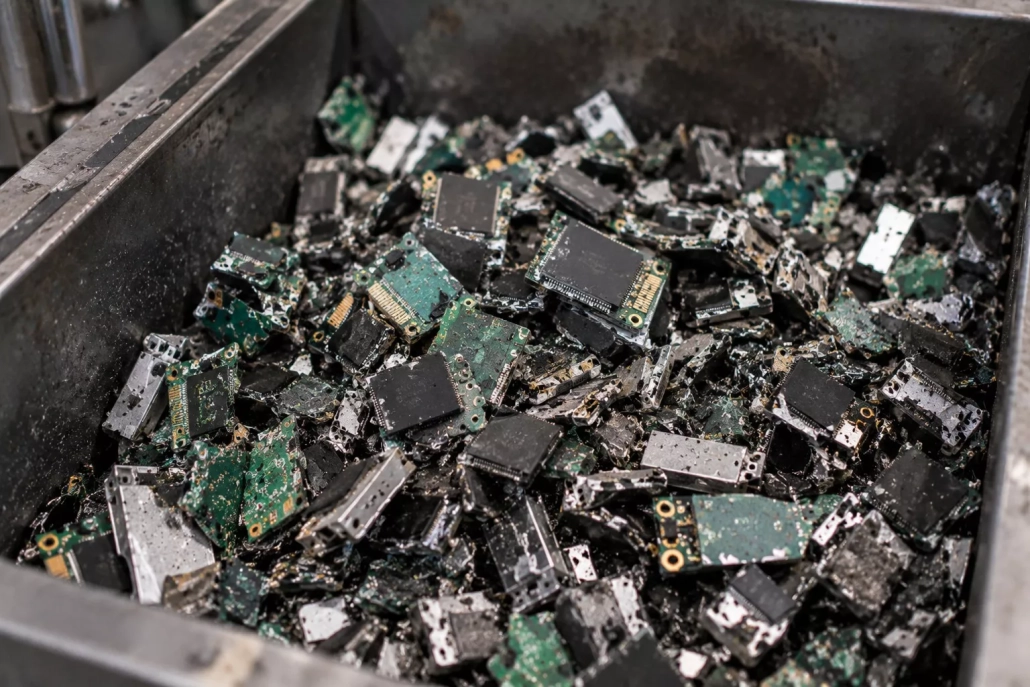
Your partner should deliver specific capabilities that align with mixed enterprise storage fleets and audit requirements. Additionally, physical destruction infrastructure should meet NIST-recognized particle sizes for flash memory.
- Certification depth: R2v3, NAID AAA, ISO 9001, ISO 14001, and ISO 45001 on file
- NIST-aligned methods: Sanitization approaches matched to NIST SP 800-88 Purge or Destroy categories
- High-capacity shredders: Equipment capable of processing SSD chips to compliant particle sizes
- Chain of custody controls: Time-stamped handoffs from pickup through final destruction
- Serialized reporting: Device-level records tied to sanitization method and verification
Partner integration also reduces audit preparation time across every regulated jurisdiction. Learn more about our ITAD services that support enterprise SSD retirement nationwide.
Turn Solid State Storage Destruction Into a Controlled, Defensible Program
Secure solid state storage destruction now sits at the intersection of data security, compliance, and operational risk management for every enterprise. Certified programs turn high-volume SSD retirement into documented outcomes that satisfy IT, legal, and compliance stakeholders alike. The result is verified sanitization backed by defensible evidence across every drive.
RAKI supports enterprise solid state storage destruction with R2v3, ISO-certified processes, NIST-aligned sanitization methods, and nationwide coverage. Our team delivers coordinated pickup, verified destruction, and audit-ready documentation on every retired SSD. To bring certified solid state storage destruction into your enterprise program, call our team today.


Leave a Reply
Want to join the discussion?Feel free to contribute!