How IT Governance Policies Should Address End-of-Life Technology Risks
Summary
Learn how IT governance policies close end-of-life technology gaps. Discover controls that reduce data risk, audit exposure, and disposal costs.
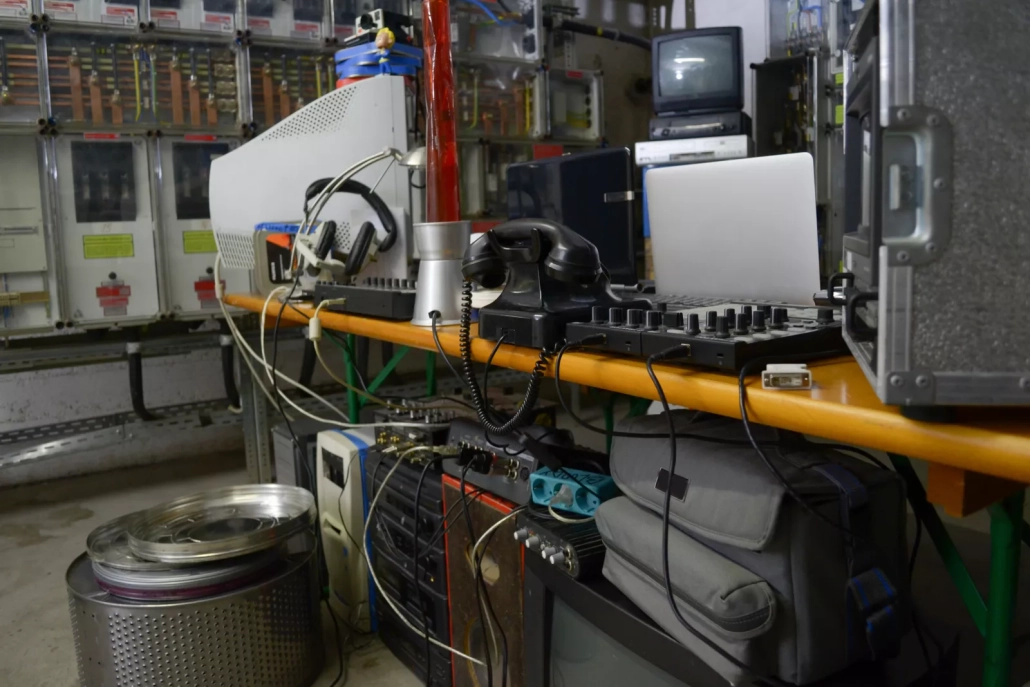
Retired laptops, servers, and storage devices rarely stay quiet in a warehouse or storage closet. They hold residual data, financial value, and regulatory obligations that continue long after decommissioning. Strong IT governance turns that lingering exposure into a controlled, documented, and auditable process.
Most breach headlines focus on active systems, yet retired hardware often carries the same sensitive data. Governance gaps at end-of-life create silent liabilities that surface during audits, mergers, or breach investigations. Your policies need clear rules for retirement, sanitization, chain of custody, and vendor accountability.
What Should IT Governance Policies Include for End-of-Life Technology?
Policies should define asset ownership, sanitization standards, documentation requirements, vendor selection criteria, and escalation paths for retired equipment. They must align disposal methods with data classification and applicable regulations such as HIPAA, GDPR, and SOX. In addition, every disposition event should produce evidence that satisfies internal auditors and external regulators.
Why End-of-Life Technology Deserves Board-Level IT Governance Attention
Retired assets often sit outside normal security monitoring, yet they still contain confidential records, credentials, and licensed software. Consequently, weak end-of-life controls expose your organization to breach costs, regulatory penalties, and reputational damage. Strong IT governance elevates disposal from a warehouse task into a monitored enterprise process.
According to IBM’s 2025 Cost of a Data Breach Report, the average global breach cost reached $4.44 million in 2025. A single unmanaged drive can trigger notification obligations, litigation, and years of remediation work. Therefore, executive sponsorship for retirement policies produces measurable risk reduction across the asset lifecycle.
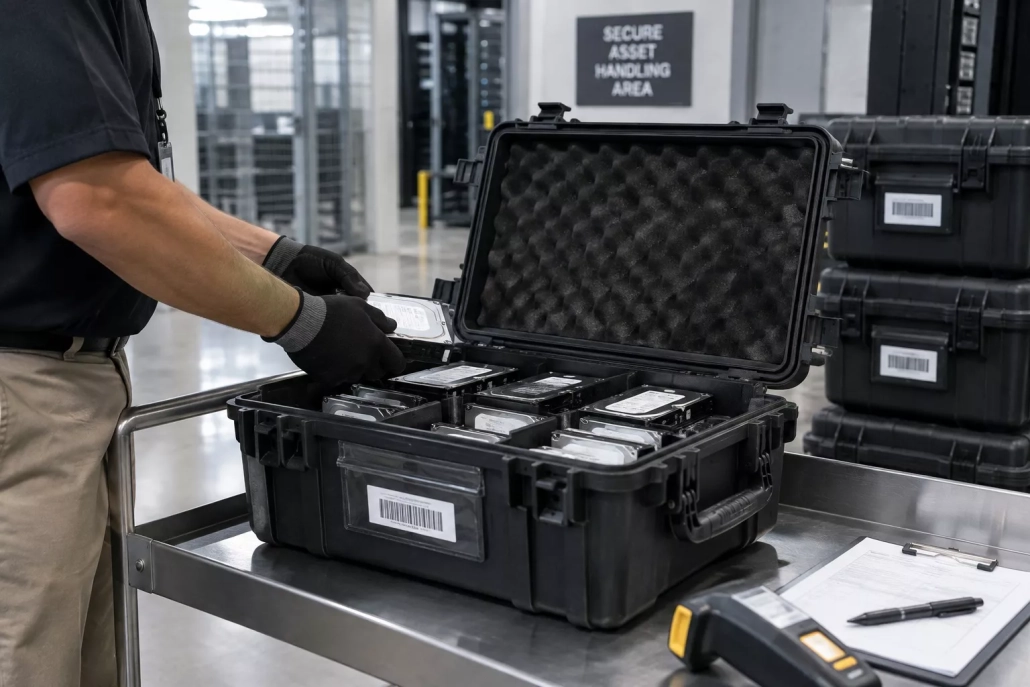
Boards increasingly ask how retired hardware is tracked, sanitized, and documented across every facility. Furthermore, insurance underwriters now request disposal evidence during cybersecurity policy renewals. Your governance framework should give leadership a clear answer backed by data.
Well-written IT governance policies also connect disposal outcomes to broader risk, compliance, and sustainability reporting. Learn more about how our ITAD services support governance-aligned reporting.
Core Elements Every Policy Should Address
A strong policy anchors end-of-life decisions in written standards rather than ad hoc judgment calls. It defines who owns retired assets, what sanitization methods apply, and how records are retained. As a result, teams across every location follow the same defensible process.
Your IT governance framework should specify controls at each stage of the retirement lifecycle. Additionally, policies must reference recognized standards so auditors can validate compliance quickly.
- Asset inventory: Track every data-bearing device from acquisition through final disposition with unique identifiers
- Data classification: Match sanitization method to data sensitivity using recognized frameworks
- Sanitization standards: Require alignment with NIST SP 800-88 Revision 2 for media sanitization decisions
- Chain of custody: Document every handoff between internal teams and external vendors
- Vendor certification: Require R2v3, ISO 14001, and ISO 45001 credentials from disposal partners
- Audit records: Retain Certificates of Data Destruction for the full regulatory retention period
Each element supports the others, so gaps in one area weaken the whole program. For example, strong sanitization without chain-of-custody records leaves your audit trail incomplete. Review our guidance on Certificates of Destruction to align documentation practices with audit expectations.
Common Failures at the End-of-Life Stage
Many organizations invest heavily in perimeter defense while treating retired equipment as an afterthought. However, attackers and auditors both know that end-of-life gaps are among the easiest to exploit. Weak IT governance at disposal often traces back to a handful of recurring failures.

Inconsistent policies across sites create the largest exposure for multi-location enterprises. Meanwhile, informal vendor relationships often lack the paperwork needed during a regulatory review.
Undocumented handoffs between departments frequently leave data-bearing devices in unsecured storage for months. Similarly, missing serial-level tracking makes it impossible to prove a specific drive was sanitized or destroyed. Both failures show up quickly during breach investigations and compliance audits.
Governance policies should therefore require standardized reporting, verified sanitization, and periodic third-party audits of disposal partners. In practice, that means treating end-of-life as a controlled workflow rather than a cleanup task. Explore our approach to standardized IT asset reporting to see how documentation reduces audit friction.
How to Operationalize IT Governance Across Multiple Locations
National organizations face the hardest version of this challenge because policies must work across dozens of sites. Consequently, uniform execution matters as much as strong written standards. Centralized coordination with a certified partner turns governance into repeatable operations.
Your policy should define single-vendor accountability, standardized pickup procedures, and consolidated reporting across every facility. Additionally, service-level expectations must be written into contracts rather than left to informal agreement.
- Single national vendor: Reduces variability, simplifies audits, and consolidates reporting
- Standard pickup workflow: Applies the same chain-of-custody steps at every site
- Uniform sanitization method: Matches data classification regardless of location
- Centralized reporting portal: Gives compliance teams a single source of truth
- Quarterly governance review: Measures adherence and identifies drift early
Centralization also reduces the hidden costs of managing multiple regional vendors with different reporting formats. Learn how About RAKI supports enterprises with nationwide coverage and consistent execution.
Strengthen Your IT Governance With a Certified Disposal Partner
Written policies only reduce risk when they are matched by disciplined execution in the field. Retired hardware moves through many hands, and each handoff needs verified controls, documented sanitization, and defensible records. A certified partner turns policy language into audit-ready evidence.
RAKI supports enterprise IT governance with R2v3, ISO-certified processes, NIST-aligned sanitization, and nationwide coverage. Our team provides the documentation, chain of custody, and reporting that IT, legal, and compliance leaders rely on. To align your end-of-life technology risks with a governance-grade disposal program, reach out to our team today.


Leave a Reply
Want to join the discussion?Feel free to contribute!